

Disputes are a normal part of business, employment, family relationships, contracts, and commercial transactions. Traditionally, many conflicts were resolved through litigation in state or federal courts. However, litigation is often expensive, time-consuming, public, and emotionally stressful. As a result, alternative dispute resolution (ADR) has become one of the fastest-growing areas of American law.
USA arbitration and mediation law governs legal procedures allowing parties to resolve disputes outside traditional courtroom litigation. Arbitration and mediation are widely used in business contracts, employment agreements, consumer transactions, construction projects, family law matters, healthcare disputes, and international commerce.
Alternative dispute resolution offers many advantages, including faster resolution, lower legal costs, privacy, and greater flexibility. However, ADR agreements can also involve important legal risks and enforceability concerns.
This comprehensive guide explains how USA arbitration and mediation law works, the differences between arbitration and mediation, legal procedures, costs, benefits, enforcement rules, and how to choose the right ADR lawyer or mediator.
What Is USA Arbitration and Mediation Law?
USA arbitration and mediation law refers to laws governing alternative dispute resolution processes used instead of traditional courtroom litigation.
ADR generally includes:
- Arbitration
- Mediation
- Negotiation
- Settlement conferences
- Neutral evaluations
These processes aim to resolve disputes more efficiently and cooperatively.
ADR law involves:
- Contract law
- Civil procedure
- Commercial law
- Employment law
- International law
- Family law
Federal and state laws strongly support alternative dispute resolution in many circumstances.
What Is Arbitration?
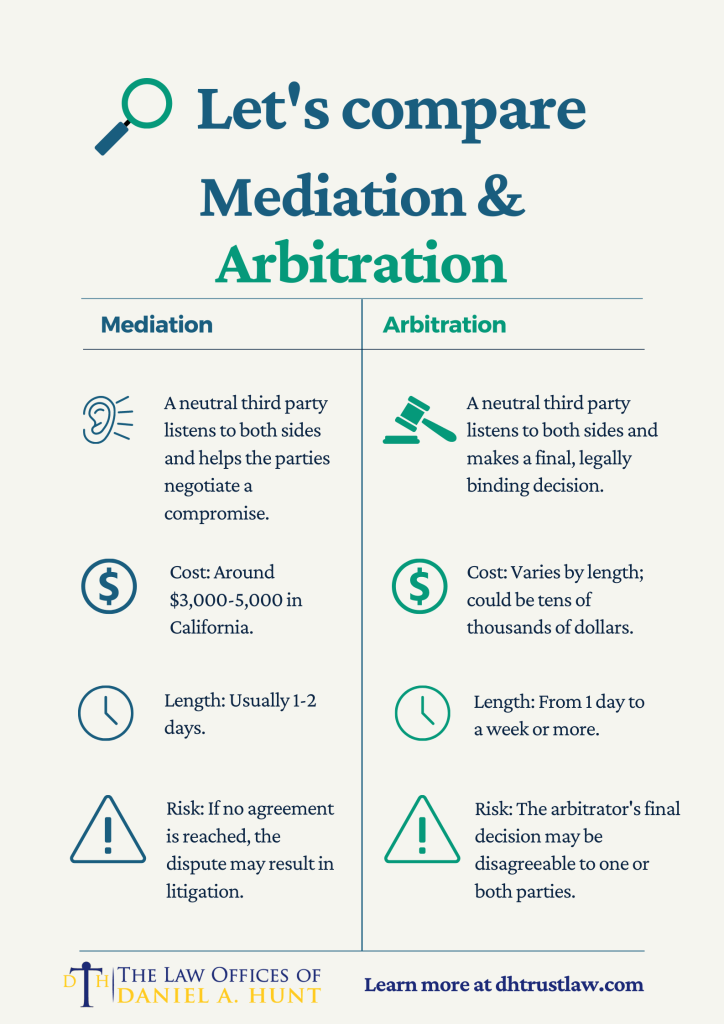
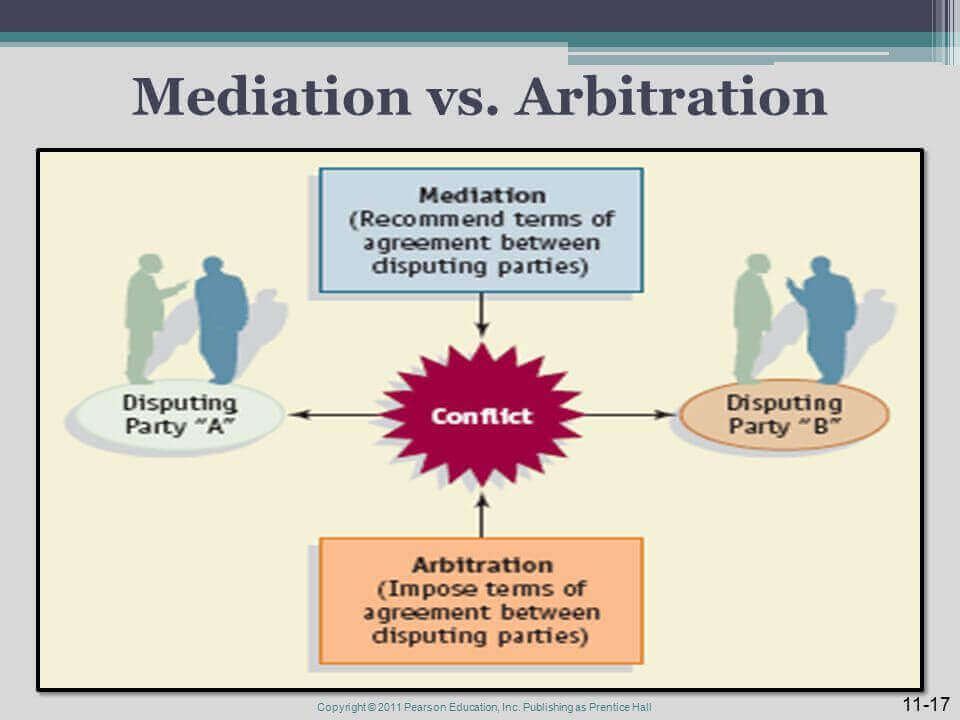
Arbitration is a private dispute resolution process where parties present their dispute to a neutral decision-maker called an arbitrator.
The arbitrator reviews:
- Evidence
- Witness testimony
- Legal arguments
- Contract provisions
After the hearing, the arbitrator issues a decision known as an arbitration award.
In many cases, arbitration decisions are legally binding and enforceable in court.
What Is Mediation?
Mediation is a voluntary negotiation process where a neutral mediator helps parties attempt to reach a settlement agreement.
Unlike arbitrators, mediators generally do not impose decisions.
Instead, mediators:
- Facilitate communication
- Identify issues
- Encourage compromise
- Assist settlement negotiations
Parties maintain control over whether to settle.
Difference Between Arbitration and Mediation
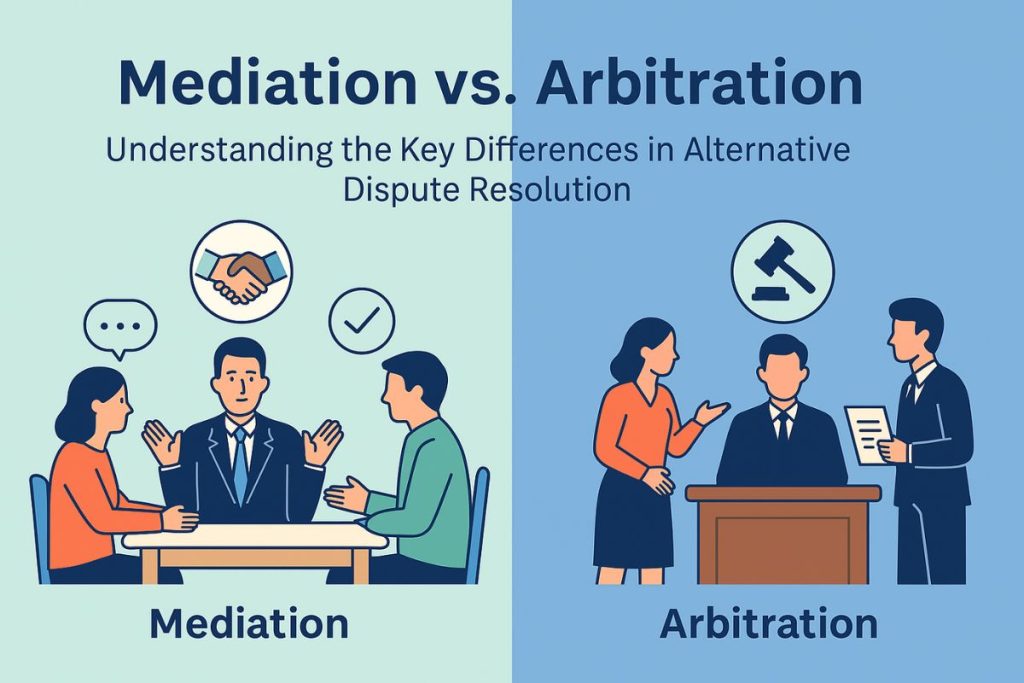
Although both are ADR methods, arbitration and mediation differ significantly.
Arbitration
- More formal
- Similar to court proceedings
- Arbitrator issues decisions
- Often legally binding
- Limited appeal rights
Mediation
- Informal and collaborative
- Parties negotiate voluntarily
- No imposed decision
- Settlement only if parties agree
- Greater flexibility
Understanding these differences helps parties choose the appropriate process.
Federal Arbitration Act (FAA)
The Federal Arbitration Act is the primary federal law governing arbitration in the United States.
The FAA strongly favors enforcement of arbitration agreements.
The law generally requires courts to enforce valid arbitration clauses involving interstate commerce.
The FAA significantly expanded arbitration use in:
- Consumer contracts
- Employment agreements
- Business transactions
Federal courts frequently uphold arbitration provisions under the FAA.
State Arbitration Laws
States also maintain arbitration statutes.
State laws may address:
- Arbitration procedures
- Arbitrator qualifications
- Disclosure requirements
- Consumer protections
- Award enforcement
State rules often supplement federal arbitration law.
Common Types of Arbitration Cases
Arbitration is widely used across many industries.
Commercial Arbitration
Businesses often resolve contract disputes through arbitration.
Employment Arbitration
Employment agreements may require arbitration of workplace disputes.
Consumer Arbitration
Credit card companies, banks, and service providers frequently include arbitration clauses in contracts.
Construction Arbitration
Construction disputes commonly involve arbitration due to technical complexity.
Securities Arbitration
Investment disputes often proceed through securities arbitration forums.
International Arbitration
Cross-border business disputes frequently use international arbitration procedures.
Arbitration Agreements and Clauses
Most arbitration cases arise from written contracts containing arbitration provisions.
These clauses may require parties to arbitrate disputes involving:
- Contracts
- Employment claims
- Consumer disputes
- Partnership disagreements
Arbitration clauses may also include:
- Venue requirements
- Governing law
- Arbitrator selection rules
- Class action waivers
Proper drafting is extremely important.
Enforceability of Arbitration Agreements
Courts generally enforce valid arbitration agreements.
However, arbitration clauses may be challenged based on:
- Fraud
- Unconscionability
- Lack of consent
- Ambiguous language
- Procedural unfairness
Courts evaluate both federal and state legal standards.
Binding vs Non-Binding Arbitration
Binding Arbitration
Binding arbitration decisions are generally final and enforceable.
Appeal rights are extremely limited.
Non-Binding Arbitration
Non-binding arbitration allows parties to reject the arbitrator’s decision and proceed to court.
Binding arbitration is far more common in commercial practice.
Arbitration Hearing Process
Although less formal than court, arbitration still follows structured procedures.
Filing a Demand
One party initiates arbitration by filing a claim.
Arbitrator Selection
Parties select one or more neutral arbitrators.
Discovery
Limited exchange of evidence may occur.
Hearings
Parties present evidence and testimony.
Arbitration Award
The arbitrator issues a written decision.
The process is often faster than traditional litigation.
Arbitration Organizations in the USA
Major arbitration providers include:
- American Arbitration Association (AAA)
- JAMS
- FINRA arbitration forums
- Industry-specific arbitration panels
These organizations provide procedural rules and arbitrator rosters.
Mediation Process in America
Mediation procedures vary depending on the dispute type.
Opening Statements
Parties explain their positions.
Joint Discussion
The mediator facilitates communication.
Private Caucuses
The mediator meets privately with each side.
Settlement Negotiation
The mediator works toward agreement.
Settlement Agreement
If successful, parties sign legally enforceable settlement documents.
Mediation often preserves relationships better than litigation.
Court-Ordered Mediation
Many courts now require mediation before trial.
Court-ordered mediation helps reduce:
- Court congestion
- Litigation costs
- Trial delays
Parties may still proceed to trial if mediation fails.
Confidentiality in Arbitration and Mediation
Privacy is a major advantage of ADR.
Confidentiality may protect:
- Business secrets
- Financial information
- Personal disputes
- Settlement discussions
However, confidentiality rules vary depending on jurisdiction and agreement terms.
Benefits of Arbitration
Arbitration offers several advantages.
Faster Resolution
Cases often conclude more quickly than court litigation.
Privacy
Arbitration proceedings are generally confidential.
Flexible Procedures
Parties can customize hearing procedures.
Industry Expertise
Arbitrators may possess specialized industry knowledge.
Reduced Formality
The process is often less rigid than courtroom trials.
Benefits of Mediation
Mediation provides additional advantages.
Collaborative Problem Solving
Parties work together toward solutions.
Cost Savings
Mediation is often less expensive than litigation.
Relationship Preservation
Mediation may reduce hostility.
Greater Control
Parties control settlement outcomes.
Flexible Solutions
Settlements may include creative terms unavailable in court judgments.
Disadvantages of Arbitration
Arbitration also creates potential concerns.
Limited Appeal Rights
Erroneous decisions may be difficult to challenge.
High Arbitrator Costs
Complex arbitrations may become expensive.
Limited Discovery
Restricted evidence gathering may disadvantage some parties.
Mandatory Arbitration Concerns
Critics argue mandatory arbitration may limit consumer and employee rights.
Disadvantages of Mediation
Mediation may not work in all situations.
No Guaranteed Resolution
Parties may fail to reach agreement.
Power Imbalances
One party may possess stronger negotiating leverage.
Delay Risks
Failed mediation may prolong disputes before litigation.
Employment Arbitration Law
Employment arbitration remains highly controversial.
Many employers require arbitration agreements covering:
- Discrimination claims
- Wage disputes
- Harassment claims
- Wrongful termination
Federal law generally favors enforcement, although some restrictions continue evolving through legislation and court decisions.
Consumer Arbitration Issues
Consumer contracts frequently contain arbitration clauses.
Examples include:
- Credit cards
- Mobile phone contracts
- Online services
- Financial products
Class action waivers in arbitration agreements remain a major legal debate.
Family Law Mediation
Family mediation is widely used in:
- Divorce disputes
- Child custody matters
- Parenting agreements
- Property division
Courts often encourage mediation to reduce family conflict.
International Arbitration Law
International arbitration governs disputes involving parties from different countries.
Common issues involve:
- Cross-border contracts
- International investments
- Trade agreements
International arbitration awards are often enforceable globally under treaties such as the New York Convention.
Arbitration Award Enforcement
Successful parties may seek court enforcement of arbitration awards.
Courts may confirm awards unless limited legal grounds exist for challenge.
Grounds for vacating awards may include:
- Fraud
- Arbitrator bias
- Serious procedural misconduct
Challenges are usually difficult.
Mediation Settlement Enforcement
Signed mediation agreements are generally enforceable contracts.
Courts may enforce settlements when parties later refuse compliance.
Proper documentation is important for enforceability.
ADR in Business and Commercial Law
Businesses increasingly prefer ADR because of:
- Speed
- Confidentiality
- Specialized expertise
- Lower public exposure
Commercial contracts frequently contain mandatory ADR provisions.
Technology and Online Dispute Resolution
Technology has expanded online ADR systems.
Modern ADR may involve:
- Virtual hearings
- Online mediation
- Electronic evidence platforms
- AI-assisted dispute management
Remote proceedings became especially common after the COVID-19 era.
Benefits of Hiring an Arbitration or Mediation Lawyer
ADR still involves significant legal complexity.
Contract Analysis
Attorneys evaluate arbitration clauses and enforceability.
Case Preparation
Lawyers organize evidence and legal arguments.
Negotiation Support
Counsel improves settlement strategy.
Hearing Representation
Attorneys present cases during arbitration proceedings.
Enforcement Assistance
Lawyers help confirm or challenge awards in court.
Cost of Arbitration and Mediation
ADR costs vary widely.
Mediation Costs
Simple mediations may cost:
- $500 to $5,000+
Arbitration Costs
Commercial arbitration may cost:
- $5,000 to $100,000+
Costs may include:
- Filing fees
- Arbitrator compensation
- Attorney fees
- Expert witnesses
Complex international disputes can become extremely expensive.
How to Choose the Best ADR Lawyer or Mediator
Selecting experienced professionals is critical.
Look for ADR Experience
Choose attorneys or mediators with substantial arbitration and mediation backgrounds.
Evaluate Subject Matter Expertise
Industry-specific knowledge is often valuable.
Review Credentials
Many professionals hold ADR certifications and specialized training.
Assess Communication Skills
Strong negotiation and advocacy skills are essential.
Discuss Fee Structures
Clarify hourly billing, mediation fees, and arbitration expenses.
Questions to Ask an Arbitration or Mediation Attorney
Before hiring counsel, ask:
What are your legal fees?
How many arbitration cases have you handled?
What ADR strategy do you recommend?
Have you handled disputes in my industry?
What are likely costs and timelines?
Can the arbitration clause be challenged?
Frequently Asked Questions (FAQ)
What is alternative dispute resolution?
Alternative dispute resolution includes legal processes such as arbitration and mediation used instead of courtroom litigation.
Is arbitration legally binding?
Usually yes. Most arbitration awards are binding and enforceable.
What is the difference between arbitration and mediation?
Arbitration results in a decision by an arbitrator, while mediation involves voluntary negotiation facilitated by a mediator.
Can arbitration agreements be challenged?
Yes. Courts may invalidate agreements involving fraud, unfairness, or lack of consent.
Is mediation confidential?
Generally yes, although confidentiality rules vary by jurisdiction.
Do I need a lawyer for mediation?
Legal representation is often beneficial, especially in complex disputes.
Can arbitration decisions be appealed?
Appeal rights are usually very limited.
Why do businesses prefer arbitration?
Businesses often prefer privacy, speed, flexibility, and reduced litigation exposure.
Are employment arbitration agreements enforceable?
Many employment arbitration agreements are enforceable under federal law.
How long does arbitration take?
Many arbitrations resolve faster than court litigation, although timelines vary by complexity.
Conclusion
USA arbitration and mediation law has become a central part of modern dispute resolution across business, employment, consumer, family, and international legal systems. Alternative dispute resolution offers important advantages including speed, confidentiality, flexibility, and reduced litigation costs.
However, arbitration and mediation also involve significant legal considerations regarding enforceability, procedural fairness, settlement rights, and strategic risk management. Because ADR outcomes can substantially affect financial interests, business operations, employment rights, and personal relationships, parties should carefully evaluate dispute resolution agreements and seek qualified legal guidance when necessary.
As courts, businesses, and consumers increasingly rely on ADR systems, arbitration and mediation law will continue playing a major role in shaping the future of conflict resolution in the United States.


